

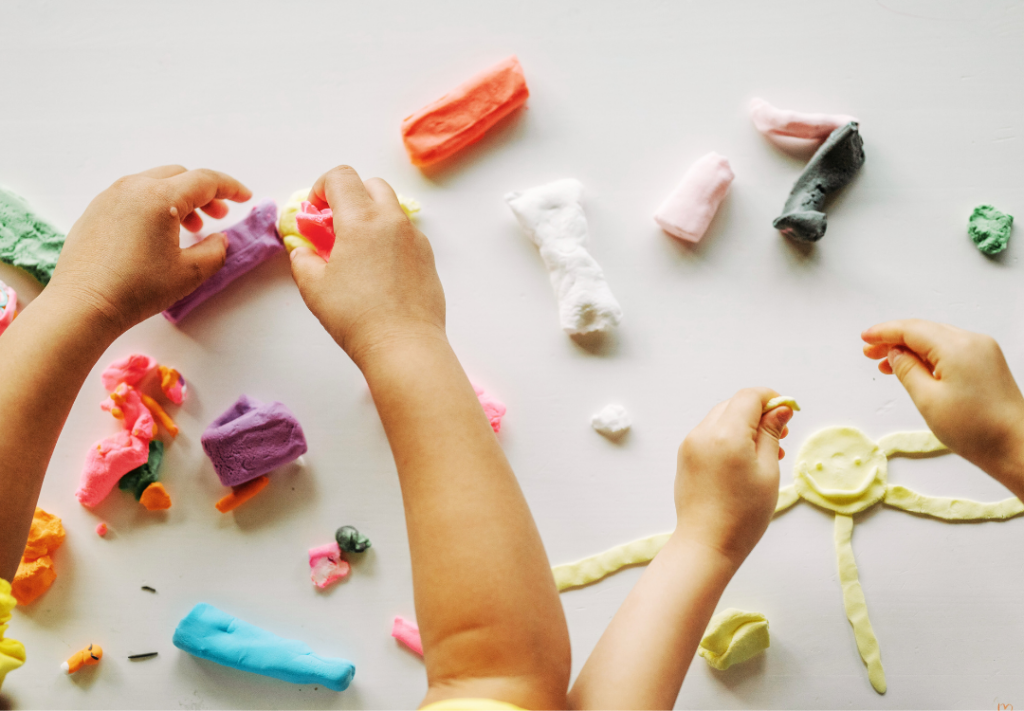
As a teacher, you know how important fine motor skills are for young learners. These skills—like holding a pencil, using scissors, and manipulating small objects—are essential for everyday tasks.
But don’t worry, developing fine motor skills doesn’t have to mean complex activities or expensive materials.
With just a few basic supplies you probably already have in your classroom, you can provide kids with plenty of fun, easy activities that will help boost their fine motor development.
Sensory Bin Fun
Sensory bins are an excellent way to engage young learners while working on fine motor skills. Fill a bin with rice, beans, or even dried pasta—items that are cheap and super easy to find—and add in small toys, scoops, or tweezers. Kids can use their fine motor skills to dig around and grab different objects.
How to Implement:
To use the sensory bin in your classroom, set it up in a designated area or on a table. Encourage children to scoop and pour the materials into different containers, practice sorting by color or size, or use small tweezers to pick up tiny objects. You can give them prompts such as “Can you find the red button?” or “Can you fill this cup with rice?” for an added challenge.
Modifications for Different Students:
- For students who are still working on grasping small objects, encourage them to use their whole hand to scoop and grab.
- For students with sensory needs, you could make the bin less overwhelming by using smaller quantities of the materials or adding calming objects like smooth stones or soft fabric.

Clothes Pin Challenges
Clothes pins are another great tool for fine motor skill development. Grab a set of clothes pins and ask the kids to clip them onto a piece of string or a piece of cardboard.
For added fun, make it a color-matching activity by using different colored clothes pins. This helps kids practice their pinching and gripping, which strengthens the small muscles in their hands.
How to Implement:
Place the string or cardboard across a table and encourage students to clip clothes pins onto the string in a specific pattern, color order, or sequence. You could also set a timer to make it more engaging and see if they can clip them on within a certain time frame.
Modifications for Different Students:
- For students who may have difficulty with the pinching motion, consider using jumbo clothes pins or having them clip the pins to a larger, easier-to-hold surface.
- For more advanced students, challenge them to match colors, shapes, or letters to their corresponding clothes pins.
Pom Poms & Pipe Cleaners
Pom poms and pipe cleaners are versatile materials that make fine motor activities both fun and effective. Try this: give kids a handful of colorful pom poms and ask them to use pipe cleaners to pick them up and place them into different containers. You can challenge them further by having them sort the pom poms by color or size.
How to Implement:
Set up a small station with pom poms in one bowl, pipe cleaners in another, and empty containers for sorting. Ask students to twist the pipe cleaner around the pom poms to pick them up, and have them practice transferring them into small cups or trays.
Modifications for Different Students:
- For younger or less dexterous children, you can give them larger pom poms and use tweezers instead of pipe cleaners to make it easier to grasp.
- For more advanced learners, eliminate the pom poms and have them practice fine motor control by twisting the pipe cleaners into shapes, such as circles or squares.
Puzzles for Fine Motor Development
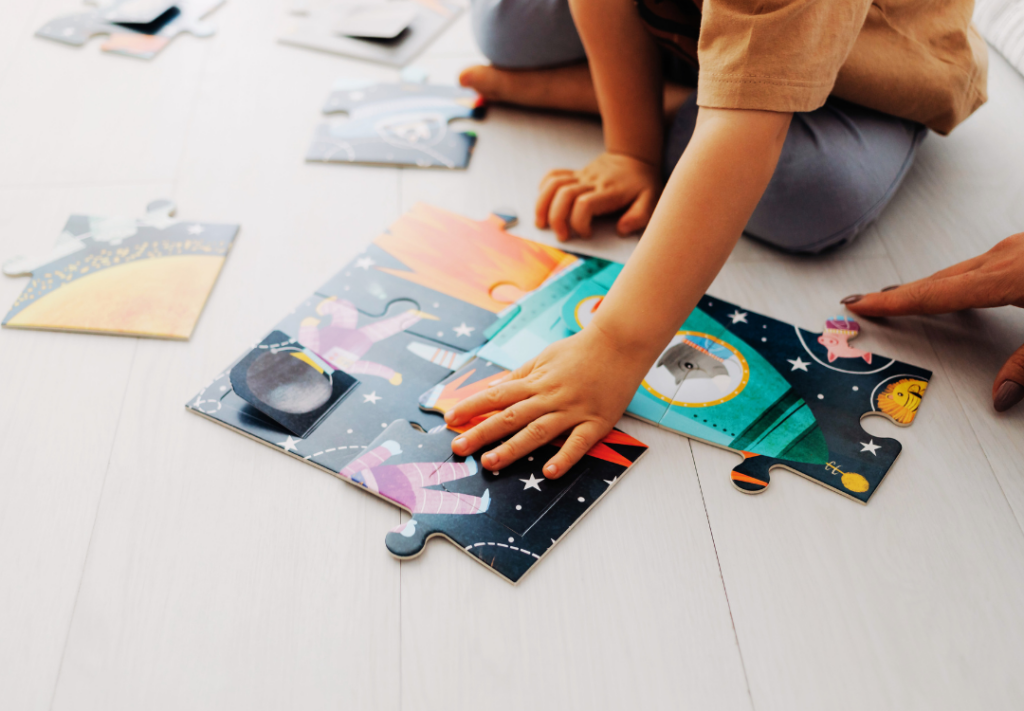
Puzzles are a fantastic way to support fine motor skills while promoting visual discrimination and hand-eye coordination. As children work to piece things together, they practice manipulating objects with their fingers and hands.
How to Implement:
Incorporate puzzles into your morning routines or use them as a calming activity during transition times. Set up a table with puzzles based on student interests—like animals, shapes, or scenes from books—and encourage students to work together to complete them.
Modifications for Different Students:
- For students who may have difficulty with small puzzle pieces, provide larger puzzle pieces or foam puzzles that are easier to manipulate.
- For more advanced learners, introduce puzzles with more pieces or ones that require them to match colors, shapes, or patterns.
Fine Motor Activities for All Ages
These activities aren’t just for kindergarteners. They can be adapted for preschoolers or older students. Occupational therapists recommend these exercises to improve fine motor skills, sensory needs, and life skills.
For more ideas, check out my blog post 10 Easy, Low-Prep Activities to Boost Fine Motor Skills. You’ll find even more simple, effective activities for your classroom.
Incorporating these fun activities into your routine will help students develop fine motor skills for academic success. Plus, they’re easy to implement and don’t require fancy materials or setups. A little creativity and some basic supplies are all you need!
Here’s the Gist
Fine motor skill development doesn’t have to be expensive or complicated.
Using simple materials like pipe cleaners, pom poms, clothes pins, and sensory bins, you can engage kids in activities that strengthen their hand muscles, improve hand-eye coordination, and develop skills for everyday tasks. These activities are easy to modify for kids of all ages and fit right into your lesson plans.
Grab your supplies and get ready to help your students build essential fine motor skills!
