

From the first moment they pick up a pencil, kindergarteners are beginning a journey of self-expression and creativity! In the beginning, kindergarten writing skills include building a strong foundation: recognizing letters, connecting them to sounds, and developing fine motor skills.
At this stage, students focus on learning both uppercase and lowercase letters, with one of their first big milestones being able to write their own name. These early steps—tracing letters, drawing shapes, and forming letters by hand—are crucial for developing the muscle memory needed for more complex writing later on.
As the year progresses, you’ll see their skills grow in exciting ways. Kindergarteners will start connecting sounds with letters, even if their spelling isn’t perfect just yet, and they’ll gain confidence in trying to write on their own. Many children will also begin to form simple words, using high-frequency words like “the,” “and,” or “is.”
By the end of the year, many will be writing simple sentences and experimenting with punctuation. It’s an incredible journey of growth and creativity!
Ready to dive deeper into what writing looks like in kindergarten? Keep reading for a closer look at what you can expect and how to support your students every step of the way!

What Writing Skills Look Like in Kindergarten
Throughout the kindergarten year, writing skills develop in exciting and meaningful ways as students move from basic letter recognition to expressing full ideas on paper. Whether they’re just starting with letter formation or diving into storytelling, here’s a clear picture of what to expect and how to support their growth every step of the way.
If you’re interested in setting up a space to help your students practice these skills, check out my post on creating a kindergarten writing center for more ideas and tips!
Beginning of the Year: Building the Basics
- Skills Students Will Learn: At the start of kindergarten, students are focused on laying the groundwork for their writing skills. Some of the first things they’ll work on are developing fine motor skills, such as hand strength, pencil grip, and finger control. These skills are essential for holding a pencil properly and forming letters.
Students will also begin learning letter formation, starting with capital and lowercase letters. A key focus will be tracing letters and shapes to improve pencil control and muscle memory. This early writing helps with phonemic awareness and sets the stage for later skills.
- Activities to Help: To help your students with fine motor development, encourage activities like tracing letters, coloring, and practicing with playdough to strengthen finger muscles. Drawing simple shapes and pictures is also a great way to build those essential motor skills.
For letter formation, you can use worksheets with dashed lines or have them form letters with materials like sand, salt trays, or even paint. These activities help improve their ability to write their own name and other simple words.
- What to Look Out For: At this stage, many students will begin drawing pictures and labeling them with a mix of letters and sometimes just a few letters or even scribbles. While they’re making the connection between oral language and written language, it’s important to be patient. You might notice some common mistakes like inconsistent letter formation, or students may struggle with gripping the pencil correctly.
Encourage proper grip using tools like special pencil grips, and if you notice frustration, allow for breaks or fun activities to relieve pressure. Writing their name is a huge milestone for many, so celebrate it as it helps them build ownership of their writing!
Middle of the Year: Starting to Form Words and Sentences
- Skills Students Will Learn: By the middle of the year, kindergarteners are ready to take their writing skills a step further. They’ll start working with sight words, forming simple words and sentences.
Students will begin combining letters to create words like “cat,” “dog,” or “hat” and will continue to build their letter-sound connection. Sentence stems, like “I like ___” or “My favorite ___ is ___,” will help guide them as they work on creating simple sentences.
- Activities to Help: At this point, provide your students with lots of opportunities to practice with sight words through flashcards, word walls, and writing exercises. Encourage them to write simple sentences using sentence starters, and provide pictures they can draw and label to support their writing.
You can also have them dictate stories to you, helping them build their storytelling skills before writing. Working on oral language by practicing retelling stories or explaining their drawings will also strengthen their writing.
- What to Look Out For: By this stage, many students will be experimenting with spelling and may rely on invented spelling (e.g., writing “kat” for “cat”). This is normal, but it’s important to guide them toward spelling sight words correctly while continuing to encourage their phonetic attempts.
Some may struggle with forming full sentences or get caught up in trying to spell harder words. Make sure to keep writing fun and offer support by using word banks or visual aids, which will help them feel more confident and independent.
End of the Year: Writing Complete Sentences and Ideas
- Skills Students Will Learn: By the end of kindergarten, students will be able to write complete sentences. Their sentences will likely include a subject and a verb, but spelling may still be unconventional.
Students will begin to express their thoughts and ideas through simple stories, such as “I went to the park” or “My favorite pet is a dog.” Many will also start incorporating punctuation, like capital letters, and proper spacing between words.
- Activities to Help: Encourage independent writing by offering fun prompts and activities where students can write and draw about their favorite things or events. Support them in writing complete sentences by continuing to use sentence starters and word banks.
Writing a mini lesson on punctuation and sentence structure will help guide them toward more conventional writing. Writing partners can also be a great tool for helping them share their ideas and collaborate with peers.
- What to Look Out For: As students gain confidence in their writing, they may start to experiment with more complex sentences, but their spelling may still be inaccurate. Many students will try to sound out words they don’t know, which is great, but they might need help to develop more consistent spelling. Watch for common mistakes like omitting spaces between words or inconsistent use of punctuation.
Kindergarten teachers can help by offering mini lessons on spacing, punctuation, and capitalization. If a student is struggling to write independently, consider offering additional support through writing partners or more targeted instruction.
Helping Reluctant Writers
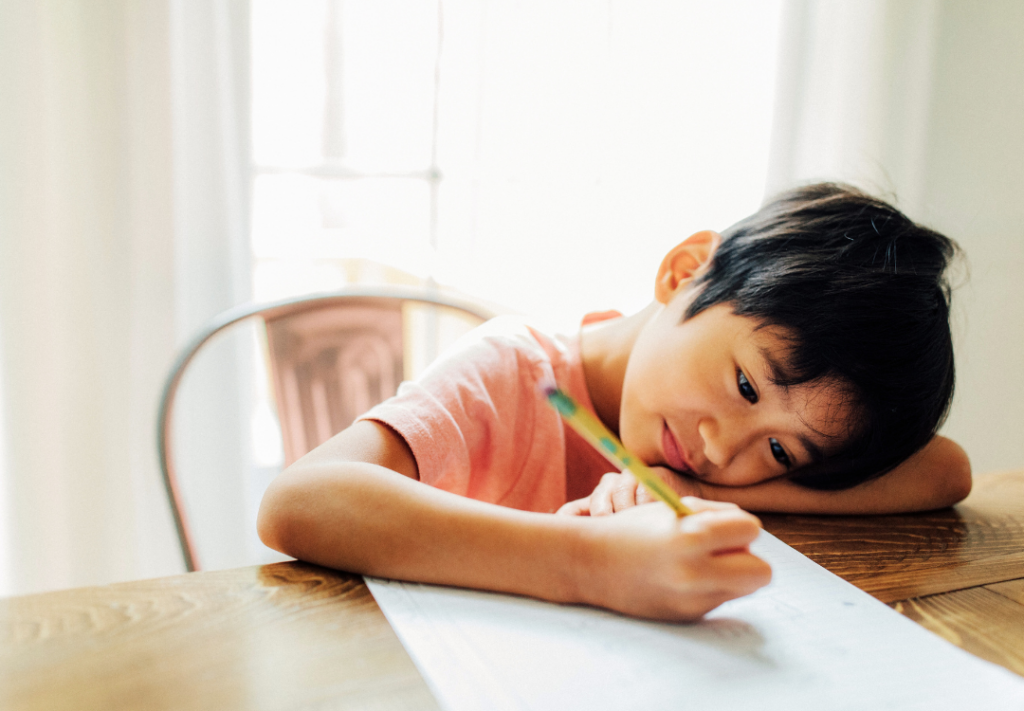
It’s not uncommon for some students to show reluctance when it comes to writing. The goal is to help them build confidence step by step. Start small and keep it fun. Sometimes, it’s easier for young learners to begin with drawing. Ask them to draw a picture first, then label it with a simple word or phrase. Drawing helps them organize their thoughts and makes the transition to writing feel less intimidating.
Using sentence stems is another fantastic tool for supporting struggling writers. Simple prompts like “I see a _____,” “My favorite _____ is _____,” or “I like _____” give students a structure to follow and take the pressure off creating an entire sentence. If a child is working on a drawing of a dog, for example, they could complete the sentence, “I like my dog.” These kinds of sentence frames not only guide reluctant writers but also help reinforce important language skills.
In addition to these strategies, you might also try some tools to make the writing process easier for struggling writers. Special pencil grips can help kids who are still working on holding a pencil correctly. They provide extra support and can make writing feel more comfortable. Another useful tool is a word spacer (or finger spacer), which helps children separate words clearly.
These simple additions to your writing instruction can make a world of difference for young learners, encouraging them to take the leap into writing with more confidence.
Every small step is progress, and with patience, encouragement, and the right tools, even the most reluctant writers can succeed. Starting with simple, manageable activities is key, and my Prewriting Bundle offers low-prep, engaging printables that help young learners build foundational writing skills step by step.
Here’s the Gist
Kindergarten writing is all about growth!
At the start of the school year, students focus on building their writing foundation, from mastering letter formation to strengthening fine motor skills. As the year progresses, they’ll move from writing their names to forming simple words and sentences. By the end of the year, many students are confidently writing short stories and expressing their ideas in writing.
Remember, each child develops at their own pace, and with the right guidance and support, every student can make meaningful progress on their writing journey!
